Vietnam · Laos · Cambodia
Expert connections to local tour operators, hotels, restaurants and cruises. Unlock 5–12% extra value with our Final Bargain Advantage.


Vientiane is unlike any other capital in Southeast Asia. There are no soaring skyscrapers, no frantic traffic jams. Instead, tree-lined boulevards, saffron-robed monks on bicycles, and the mighty Mekong River define its gentle rhythm. As the political and cultural heart of Laos, Vientiane offers a serene blend of Buddhist temples, French colonial heritage, and the warmth of Lao hospitality. This is a city made for slow exploration – by bicycle, by foot, and with an open heart.
Vientiane (pronounced “Wiang Chan”) became the capital of the Lane Xang kingdom in the 16th century, replacing Luang Prabang. Its name means “Sandalwood City” (or, in some interpretations, “City of the Moon”). The city was largely destroyed during the Siamese invasion of 1827 and later rebuilt under French colonial rule (1893–1953). The French left a legacy of elegant villas, wide avenues, and the Patuxai monument – often described as an “Arc de Triomphe with Lao motifs.” Today, Vientiane remains a city of low-rise buildings, where the tallest structures are the golden spires of its stupas.
Pha That Luang (Great Sacred Stupa) is the most important national monument in Laos, representing both Buddhist faith and Lao sovereignty. The original stupa was built in the 3rd century as a Hindu temple, but the current golden structure dates from 1566 under King Setthathirath. The 45-meter-high central spire is surrounded by smaller spires, symbolizing the lotus flower. Every November, the That Luang Festival draws thousands of monks and pilgrims for a week of ceremonies, processions, and traditional games. The surrounding grounds also house statues of King Setthathirath and the reclining Buddha.

Wat Si Saket is the oldest surviving temple in Vientiane, built in 1818. Its cloister houses over 6,000 tiny Buddha images, creating a mesmerising sight. The temple survived the 1827 Siamese destruction because it was used as a storehouse. Wat Phra Keo, across the street, once housed the Emerald Buddha (now in Bangkok). It is now a museum of Lao Buddhist art. Other notable temples include Wat Mixay, with its vibrant murals, Wat Ong Teu (home to a large bronze Buddha), and Wat Inpeng, known for its meditation garden. Each temple offers a quiet refuge from the tropical heat.
“Vientiane is a place where you can hear your own thoughts. The temples do not compete for attention; they simply exist, like quiet elders watching over the city.” — Lao architect Souk Souvannavong
Inspired by the Arc de Triomphe in Paris but distinctly Lao, Patuxai was built between 1957 and 1968 using funds intended for a new airport. The monument commemorates Lao independence from France and those who fought for it. The name means “Victory Gate.” Intricate carvings of Hindu deities and Lao mythical creatures adorn the ceilings. Climb to the top for panoramic views of Vientiane’s tree-lined avenues and the distant Mekong. The surrounding park is a popular evening gathering spot for locals.
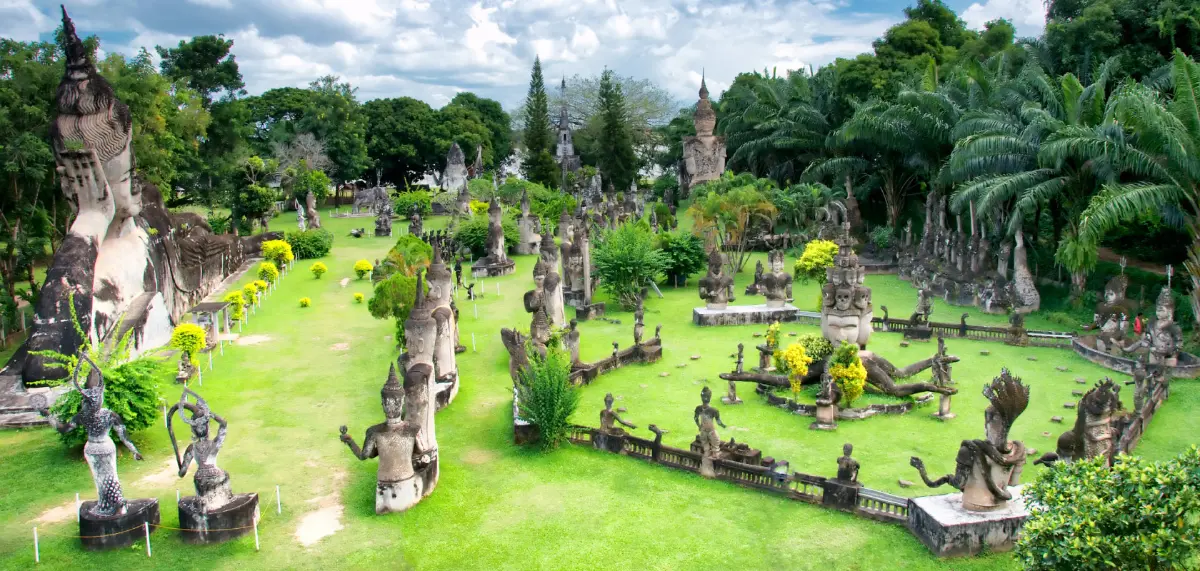
Located about 25 kilometers southeast of Vientiane, near the Thai border, Buddha Park (Xieng Khuan) is a strange and wonderful collection of over 200 Hindu and Buddhist statues. Created in 1958 by a mystic monk named Luang Pu Bunleua Sulilat, the park features a giant reclining Buddha (40 meters long), a three-meter-high pumpkin-like structure that represents heaven and hell (you can climb inside), and figures of demons, gods, and animals. The park can be reached by bus, taxi, or rented bicycle – a half-day trip well worth the journey.
The Mekong River is Vientiane’s lifeblood. As the dry season lowers the water level, a wide sandy bank appears, where locals and tourists gather to watch the sunset. The riverfront promenade, Chao Anouvong Park, is lined with statues, exercise equipment, and food stalls. In the evening, a bustling night market pops up along the river, selling textiles, souvenirs, and street food. Don’t miss lao-style barbecue (sin dad) and cold Beerlao. Across the river, on clear days, you can see the hills of Thailand. The riverside is also the departure point for sunset cruises.
Vientiane is a fantastic place to explore Lao food. Must-try dishes include laap (minced meat salad with herbs and toasted rice), tam mak hoong (spicy green papaya salad), mok pa (steamed fish in banana leaves), and khao piak sen (chicken noodle soup). The city has excellent French-inspired bakeries (croissants and baguettes are ubiquitous), and coffee from the Bolaven Plateau is outstanding. For a unique experience, visit the morning market (Talat Sao) for local snacks or the Kualao Restaurant for traditional Lao music and dance performances with your meal.
Vientiane may not have the dramatic landscapes of Luang Prabang or the bustle of Bangkok, but it possesses a rare quality: the permission to slow down. Here, you can spend a morning in a temple garden, an afternoon cycling along the Mekong, and an evening sharing a barbecue with new friends. The capital of Laos invites you to exhale. And in that exhale, you discover the true meaning of sabai sabai – the Lao art of taking it easy.
“What surprised you most about Vientiane? Share your story – or let Indochine Chic arrange a custom city tour with a local guide.”